Trace food-safety hazards through receiving, preparation and service with original cases and worked explanations.
Read 10 original sample questions with worked explanations before opening the practice studio. These examples introduce selected topics from this ServSafe Manager foundation path.
Free access · No sign-up · No personal progress recorded on this page
What this practice covers
Manager food-safety knowledge foundations, using explicitly identified 2022 FDA model-code cases; not Food Handler certification.
150 four-choice and 50 select-all learning items across 50 authored cases. Multi-select is a teaching task, not a claim of the formal ServSafe response format.
10 public examples200 question variants in the studio50 task families
Review status: Independent educator review and learner calibration are pending. Use these selected foundation examples alongside the coverage map and current official references.
A food employee returns from the restroom and is about to put on gloves for sandwich preparation. Select every proposed response that fails to apply the control needed in this case.
Select all answers that apply.
Rinse the gloves while they are worn.
Put on gloves without washing hands.
Use hand antiseptic alone instead of handwashing.
Wash and dry hands, then put on new gloves.
Answer: Put on gloves without washing hands.; Rinse the gloves while they are worn.; Use hand antiseptic alone instead of handwashing.
Identify the controlling condition: Handwashing.
Put on gloves without washing hands. Hands can contaminate gloves while the employee puts them on.
Rinse the gloves while they are worn. Washing disposable gloves is not a substitute for clean hands and new gloves.
Use hand antiseptic alone instead of handwashing. Hand antiseptic does not replace required washing with soap and water.
Do not select the compliant response: Wash and dry hands, then put on new gloves.
Compare the other answer choices
Wash and dry hands, then put on new gloves.
This is the response that applies the relevant control, so it should not be selected as a failure.
A manager must thaw frozen meat safely for preparation tomorrow. Select every proposed response that fails to apply the control needed in this case.
Select all answers that apply.
Thaw it overnight on a room-temperature counter.
Leave it in a bucket of standing warm water overnight.
Thaw under refrigeration at 41 F or below.
Put it near a hot stove until the outside softens.
Answer: Thaw it overnight on a room-temperature counter.; Leave it in a bucket of standing warm water overnight.; Put it near a hot stove until the outside softens.
Identify the controlling condition: Refrigerator thawing.
Thaw it overnight on a room-temperature counter. Counter thawing can warm the exterior while the center remains frozen.
Leave it in a bucket of standing warm water overnight. Warm stagnant water is not the model controlled running-water method.
Put it near a hot stove until the outside softens. External warming near a stove creates uncontrolled temperature exposure.
Do not select the compliant response: Thaw under refrigeration at 41 F or below.
Compare the other answer choices
Thaw under refrigeration at 41 F or below.
This is the response that applies the relevant control, so it should not be selected as a failure.
A buffet uses the same customer plate for repeated self-service trips at a station that requires clean tableware. What is the most appropriate response?
Ignore plate contact because the buffet food is hot.
Provide a clean plate for the return trip.
Let the customer reuse a soiled plate against the serving utensil.
Wipe the plate with a shared towel and reuse it.
Answer: Provide a clean plate for the return trip.
Identify the controlling condition: Consumer protection.
Soiled consumer tableware can contaminate utensils and food at the service point.
Apply it: Provide a clean plate for the return trip.
Compare the alternative "Let the customer reuse a soiled plate against the serving utensil.": Contact with used tableware can transfer contamination back to common utensils.
Compare the other answer choices
Let the customer reuse a soiled plate against the serving utensil.
Contact with used tableware can transfer contamination back to common utensils.
Wipe the plate with a shared towel and reuse it.
A shared towel is not a proper warewashing method.
Ignore plate contact because the buffet food is hot.
Hot holding does not prevent contamination introduced at service.
A worker applies sanitizer to a visibly greasy food-contact surface without first cleaning it. Select every proposed response that fails to apply the control needed in this case.
Select all answers that apply.
Increase sanitizer strength without following its label.
Remove soil, rinse appropriately, then sanitize.
Assume sanitizer dissolves every type of grease.
Dry the dirty surface and call it sanitized.
Answer: Assume sanitizer dissolves every type of grease.; Dry the dirty surface and call it sanitized.; Increase sanitizer strength without following its label.
Identify the controlling condition: Cleaning and sanitizing.
Assume sanitizer dissolves every type of grease. Sanitizing and soil removal are different operations.
Dry the dirty surface and call it sanitized. Drying visible soil does not remove it or establish sanitization.
Increase sanitizer strength without following its label. Off-label concentration can create chemical hazards and does not replace cleaning.
Do not select the compliant response: Remove soil, rinse appropriately, then sanitize.
Compare the other answer choices
Remove soil, rinse appropriately, then sanitize.
This is the response that applies the relevant control, so it should not be selected as a failure.
A server is arranging ready-to-eat bread with bare hands, with no approved alternative procedure. Select every proposed response that fails to apply the control needed in this case.
Select all answers that apply.
Touch only the outside edge of each slice.
Use suitable utensils or gloves after handwashing.
Continue because the bread is dry.
Wash hands once at opening and use bare hands all day.
Answer: Continue because the bread is dry.; Touch only the outside edge of each slice.; Wash hands once at opening and use bare hands all day.
Identify the controlling condition: Ready-to-eat food handling.
Continue because the bread is dry. A dry texture does not create a general exemption from the handling rule.
Touch only the outside edge of each slice. The outside edge is still part of the ready-to-eat food.
Wash hands once at opening and use bare hands all day. Earlier washing does not authorize prohibited bare-hand contact.
Do not select the compliant response: Use suitable utensils or gloves after handwashing.
Compare the other answer choices
Use suitable utensils or gloves after handwashing.
This is the response that applies the relevant control, so it should not be selected as a failure.
A cook checks a thick roast with a probe that barely enters the hot surface. Select every proposed response that fails to apply the control needed in this case.
Select all answers that apply.
Touch the outside with a gloved hand to estimate doneness.
Use the oven thermostat in place of a food probe.
Record the surface temperature as the center temperature.
Measure the thickest relevant part with a suitable probe.
Answer: Record the surface temperature as the center temperature.; Use the oven thermostat in place of a food probe.; Touch the outside with a gloved hand to estimate doneness.
Identify the controlling condition: Temperature measurement.
Record the surface temperature as the center temperature. A hot surface can conceal a cooler center.
Use the oven thermostat in place of a food probe. An oven setting does not show the internal product temperature.
Touch the outside with a gloved hand to estimate doneness. Touch cannot provide the required quantitative internal measurement.
Do not select the compliant response: Measure the thickest relevant part with a suitable probe.
Compare the other answer choices
Measure the thickest relevant part with a suitable probe.
This is the response that applies the relevant control, so it should not be selected as a failure.
Start with the lesson linked to an unfamiliar topic, try a focused set in the practice studio, then return to the review cards. Your practice progress stays in this browser.
Catalog scope record: . This records the saved content mapping, not a guarantee that every external rule is current.
Foundation learning pilot:200 items across 50 authored case families, not 200 independent scenarios or a complete ServSafe simulation.
Core numeric food-safety examples explicitly use the 2022 FDA Food Code model; state/local adoption and any 2026-edition changes are not asserted to be identical.
Official ServSafe sources disagree on the passing threshold; check the current enrollment product and official FAQ.
Independent food-safety professional review and learner calibration remain pending.
Foundation pilot, not full syllabus coverage or official simulation
Question variants are not independent question designs
Independent educator review pending
Evidence integrity and structure checks do not establish factual or audiovisual fidelity
Check the exam provider's current information for registration, test rules and official preparation materials. The exam guide collects the relevant official references.

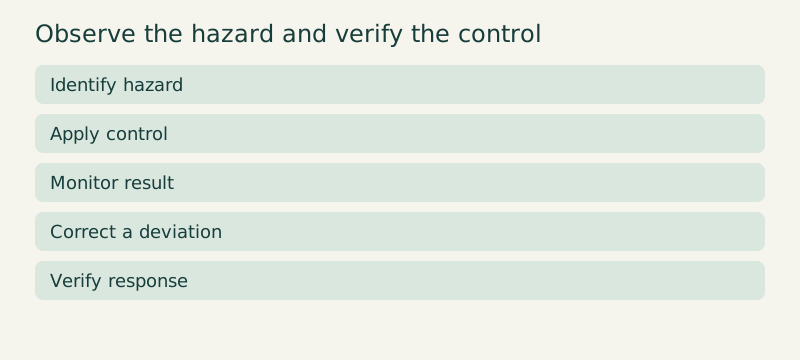 Open full-size diagram ↗