
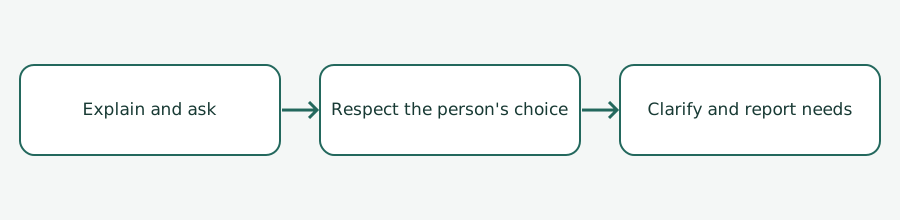
Practice connecting observations, individual preferences and current care instructions to a justified nurse-aide response. The cases are original teaching examples, not reproduced examination items.
Build a response rather than memorize a slogan
A nurse aide's useful contribution starts with noticing the person in front of them. A worksheet can make a decision seem simple, yet a real care plan contains individual preferences, assistance levels and reporting instructions. The purpose of these original cases is to connect an observed cue to an appropriate action, not to teach a universal shortcut that replaces the plan. Read each case, say what is known, and identify what still needs clarification. Treat the resident as a participant rather than an object of a task.
Three distinctions guide this resource. Observation is not diagnosis: describe what happened without inventing its cause. Assistance is not takeover: help with the parts that require support while preserving safe independence. Completion is not resolution: a routine task may be finished while a newly reported concern still needs the nurse's assessment. The original diagram separates those stages so a learner can explain where a proposed response goes wrong.
Bathing with consent
A resident declines a shower because the room feels cold but accepts an offer of warm washcloths. A resident who can make this decision may refuse routine personal care. Respect the choice, explore a practical alternative, and communicate what was declined so the plan can be reviewed.
An appropriate response is: Respect the refusal, explore an acceptable alternative, and tell the nurse what care was declined. Consider the tempting alternative, ask a relative to select the bathing method instead of checking the capable resident's preference. It is inappropriate because a capable resident remains the decision-maker for this personal-care choice. Before choosing, identify which detail in the scenario makes this distinction relevant.
PAUSE & TRYIn this case, which stated detail should guide the aide's decision?Reveal explanation
Relevant cue: A resident declines a shower because the room feels cold but accepts an offer of warm washcloths. A resident who can make this decision may refuse routine personal care. Respect the choice, explore a practical alternative, and communicate what was declined so the plan can be reviewed.
Privacy during personal care
A resident needs help changing clothing near an open bedroom door. Explain the care and protect the person from unnecessary exposure. Covering areas not being washed or treated helps preserve dignity without preventing the necessary task.
An appropriate response is: Explain personal care, use the curtain or door, and cover areas not needed for the current task. Consider the tempting alternative, cover the resident after completing all personal care, even when a visitor remains in the shared room. It is inappropriate because privacy is needed during care, not only afterward. Before choosing, identify which detail in the scenario makes this distinction relevant.
PAUSE & TRYIn this case, which stated detail should guide the aide's decision?Reveal explanation
Relevant cue: A resident needs help changing clothing near an open bedroom door. Explain the care and protect the person from unnecessary exposure. Covering areas not being washed or treated helps preserve dignity without preventing the necessary task.
Maintaining self-care ability
A resident can brush teeth after the aide sets up supplies. Restorative care protects the abilities a person still has. Offer adequate time, adapted equipment, and the assistance specified in the plan instead of choosing either total dependence or unsupported effort.
An appropriate response is: Provide setup and time for safe self-care, helping with the parts the resident cannot manage. Consider the tempting alternative, leave all supplies nearby and require the resident to complete the task without the planned assistance. It is inappropriate because supporting independence does not mean withholding needed help. Before choosing, identify which detail in the scenario makes this distinction relevant.
PAUSE & TRYIn this case, which stated detail should guide the aide's decision?Reveal explanation
Relevant cue: A resident can brush teeth after the aide sets up supplies. Restorative care protects the abilities a person still has. Offer adequate time, adapted equipment, and the assistance specified in the plan instead of choosing either total dependence or unsupported effort.
Hand hygiene before resident contact
An aide has handled a phone and is about to help a resident with grooming. Hand hygiene is needed at the point of care. It interrupts transfer from hands to the person or equipment before contact, rather than only after a visible spill.
An appropriate response is: Perform hand hygiene at the point of care before touching the resident or clean supplies. Consider the tempting alternative, disinfect the nearby equipment but begin direct resident care before cleaning hands after environmental contact. It is inappropriate because cleaning equipment does not clean the hands. Before choosing, identify which detail in the scenario makes this distinction relevant.
PAUSE & TRYIn this case, which stated detail should guide the aide's decision?Reveal explanation
Relevant cue: An aide has handled a phone and is about to help a resident with grooming. Hand hygiene is needed at the point of care. It interrupts transfer from hands to the person or equipment before contact, rather than only after a visible spill.
Hand hygiene after glove removal
An aide removes gloves after assisting toileting. Glove removal is followed by hand hygiene. Gloves are a barrier for a specific task and do not certify that hands remained uncontaminated.
An appropriate response is: Remove the used gloves appropriately, perform hand hygiene, then move to the next task or handle clean supplies. Consider the tempting alternative, wash the used disposable gloves and keep wearing them rather than removing them and cleaning the hands. It is inappropriate because disposable gloves are not made reusable by washing. Before choosing, identify which detail in the scenario makes this distinction relevant.
PAUSE & TRYIn this case, which stated detail should guide the aide's decision?Reveal explanation
Relevant cue: An aide removes gloves after assisting toileting. Glove removal is followed by hand hygiene. Gloves are a barrier for a specific task and do not certify that hands remained uncontaminated.
Visibly soiled hands
An aide has visible body-fluid soil on the skin after a care task. The hand hygiene method depends on the condition of the hands. Visible soil calls for soap and water rather than treating all situations as interchangeable.
An appropriate response is: Wash visibly soiled hands with soap and water before touching the resident or clean supplies. Consider the tempting alternative, cover the visible residue with gloves because the gloves will separate the hands from the resident. It is inappropriate because covering soil does not remove it or replace hand hygiene. Before choosing, identify which detail in the scenario makes this distinction relevant.
PAUSE & TRYIn this case, which stated detail should guide the aide's decision?Reveal explanation
Relevant cue: An aide has visible body-fluid soil on the skin after a care task. The hand hygiene method depends on the condition of the hands. Visible soil calls for soap and water rather than treating all situations as interchangeable.
Moving from a soiled site to a clean site
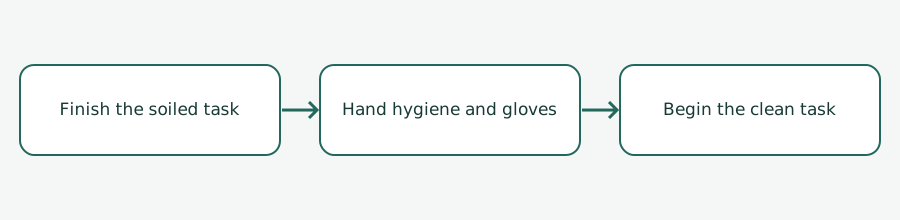
An aide handles soiled linen before helping with clean dressing supplies. Care can transfer organisms within the same resident as well as between residents. Reassess hand hygiene and gloves when moving from a soiled body site to a clean site.
An appropriate response is: Remove contaminated gloves, perform hand hygiene, and use fresh gloves if indicated before the clean task. Consider the tempting alternative, wipe contaminated gloves on a clean towel and immediately handle the supplies needed for the next task. It is inappropriate because wiping gloves is not an appropriate substitute for changing barriers and cleaning hands. Before choosing, identify which detail in the scenario makes this distinction relevant.
PAUSE & TRYIn this case, which stated detail should guide the aide's decision?Reveal explanation
Relevant cue: An aide handles soiled linen before helping with clean dressing supplies. Care can transfer organisms within the same resident as well as between residents. Reassess hand hygiene and gloves when moving from a soiled body site to a clean site.
Selecting personal protective equipment
A new task creates a different exposure risk from the task just completed. Standard Precautions depend on the task's likely exposure to infectious material. Transmission-based instructions may add requirements; check them before entering or beginning care.
An appropriate response is: Select required PPE before starting the task, based on expected exposure and any posted additional precautions. Consider the tempting alternative, use no barrier for body-fluid contact when the resident has no confirmed infection recorded in the chart. It is inappropriate because standard Precautions do not depend on a confirmed infection diagnosis. Before choosing, identify which detail in the scenario makes this distinction relevant.
PAUSE & TRYIn this case, which stated detail should guide the aide's decision?Reveal explanation
Relevant cue: A new task creates a different exposure risk from the task just completed. Standard Precautions depend on the task's likely exposure to infectious material. Transmission-based instructions may add requirements; check them before entering or beginning care.
Protecting care information
An aide is asked to post a resident's care experience online. Privacy includes the content of records and conversations. Use the authorized care process and limit disclosure to the appropriate purpose and people.
An appropriate response is: Share relevant information through authorized care channels, protecting identifiable details from people without an appropriate need or permission to receive them. Consider the tempting alternative, post the care experience online after removing only the first name while retaining other identifying clinical and personal details. It is inappropriate because other details can still identify the resident. Before choosing, identify which detail in the scenario makes this distinction relevant.
PAUSE & TRYIn this case, which stated detail should guide the aide's decision?Reveal explanation
Relevant cue: An aide is asked to post a resident's care experience online. Privacy includes the content of records and conversations. Use the authorized care process and limit disclosure to the appropriate purpose and people.
Supporting the right to raise concerns
A resident requests assistance contacting the person who handles concerns. Residents may voice concerns without discrimination or reprisal. The aide supports access to the appropriate process rather than deciding that a complaint is disloyal.
An appropriate response is: Listen respectfully, explain how to contact the appropriate person, and support access to the concern or grievance process without retaliation. Consider the tempting alternative, tell the resident that repeated concerns may lead to less assistance during later shifts because staff time is limited. It is inappropriate because threatened retaliation undermines the right to raise concerns. Before choosing, identify which detail in the scenario makes this distinction relevant.
PAUSE & TRYIn this case, which stated detail should guide the aide's decision?Reveal explanation
Relevant cue: A resident requests assistance contacting the person who handles concerns. Residents may voice concerns without discrimination or reprisal. The aide supports access to the appropriate process rather than deciding that a complaint is disloyal.
Transfer the method to your next practice session
Try a short mixed set before rereading. For each answer, explain the observation, the care principle and why the alternatives do not meet the need. A correct letter without that explanation can conceal guessing. If a question introduces an unfamiliar device, a new symptom or conflicting instructions, do not fill the gap with a remembered routine. Recognize the need for guidance and report the unresolved issue.
These cases are original learning examples. They are not official CNA examination items, a state handbook, a complete clinical procedure or permission to perform a task. Use the current handbook for the testing jurisdiction and supervised training for practical skills. Clinical educator review and learner calibration remain pending. No video transcript, time code or audiovisual review is claimed for this independently written guide.
Turn the idea into practice.
Apply the rule to a new case, then explain your choice.
Practice this skillSources & authorship
Independently authored educational guide informed by official curriculum, resident-rights and infection-prevention references. Raw web-read evidence is retained separately from failed direct HTTP attempts.
Original editorial explanation and original contextual cases; no official question or extended source text reproduced.
Independent educator review is pending. This guide is not an official exam paper or a video transcript.
Federal nurse aide training curriculumFederal long-term-care resident rightsCDC core infection prevention practices