
An original guide to distinguishing weight from restraint, symptoms from readiness, and emergency response from improvisation.
A decision method that preserves the conditions
A truck can be under a weight limit and still be unsafe. It can carry securely restrained cargo but have an impaired driver, or it can be mechanically sound while a roadside response endangers approaching traffic. These are separate questions, each requiring its own evidence. This guide links the conditions without pretending that one successful check settles all the others.
Use comparisons to test the reasoning. What changes when heavy cargo is moved upward without changing its total mass? Why can a load need checking again after a break? Why does a tire's hot pressure not call for bleeding air to its cold reading? Explain the mechanism before memorizing an action, and use the issuing state's current requirements for the actual licensing process.
Keep weight distribution and center of gravity appropriate
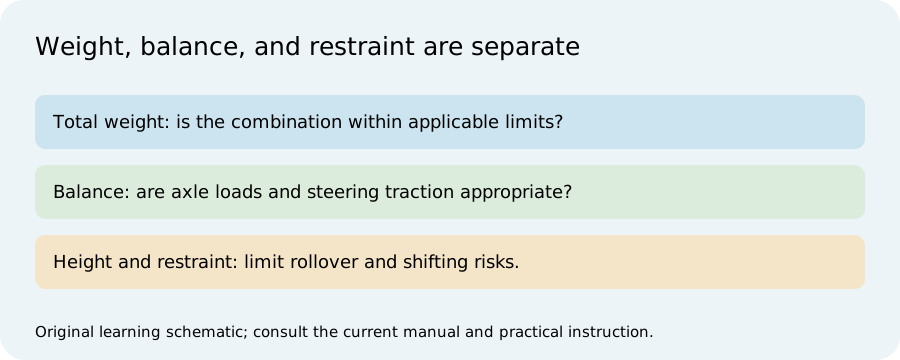
Total loaded weight is only one part of load safety. Cargo height affects rollover, and weight distribution affects axle loads and steering traction. A load can be within its total limit yet be unsuitable because it is top-heavy or shifts too much load away from the steering axle.
Keep cargo's center of gravity low to reduce rollover risk. High heavy cargo raises the center of gravity even when total weight is legal. Consider two cases: Heavy pallets are stacked high above lighter freight. A load is under the total weight limit but top-heavy. In each case, the relevant action is lower the heavy cargo's position and reduce rollover risk. The contrast is treat legal total weight as proof that any stacking height is safe. This comparison tests which condition controls the choice, rather than whether an action is physically possible.
Distribute weight so axle loads and steering traction remain appropriate. Placing too much weight at the rear can leave the steering axle too lightly loaded. Consider two cases: Most freight is concentrated at the rear of the vehicle. A steering axle has too little load because cargo is shifted far back. In each case, the relevant action is correct the distribution and check the affected axle loads. The contrast is ignore distribution once total weight is legal. This comparison tests which condition controls the choice, rather than whether an action is physically possible.
Describe a loading change that lowers the center of gravity without changing total weight. Then describe a distribution problem that can lighten the steering axle. Explain why neither an empty floor area nor a legal total weight proves that the arrangement is safe.
PAUSE & TRYThe truck steers poorly after freight is moved to the rear. Which response best follows the general-knowledge guidance in the official commercial driver guide?Reveal explanation
Correct the distribution and check the affected axle loads. Placing too much weight at the rear can leave the steering axle too lightly loaded.
Restrain cargo and recheck it during travel
Motion applies forces that are absent while the vehicle is parked. Braking, turning, and starting can move a load that looked stable at the dock. Securement equipment, blocking, and bracing must fit the movement risk. Rechecks matter because cargo can settle or restraints can loosen without a visible incident.
Restrain cargo against movement so it cannot shift, fall, or create loss of control. Vehicle motion during braking, turning, and acceleration loads the restraint system. Consider two cases: Loose freight can slide toward a trailer door. A load can move during a sharp stop. In each case, the relevant action is secure the load against the forces of travel. The contrast is assume friction while parked proves securement under braking. This comparison tests which condition controls the choice, rather than whether an action is physically possible.
For accessible cargo with no inspection exemption, inspect cargo and securing devices within the first 50 miles after beginning a trip. Early movement can settle a load and loosen its restraints. Consider two cases: The cargo is accessible and no inspection exemption applies. A loaded truck has just begun a trip. The cargo is accessible and no inspection exemption applies. The initial cargo securement has not been rechecked since departure. In each case, the relevant action is make the required check within the first 50 miles. The contrast is delay the first check until every load has traveled 500 miles. This comparison tests which condition controls the choice, rather than whether an action is physically possible.
For accessible cargo with no inspection exemption, recheck cargo after a break and at the guide's 3-hour or 150-mile interval. Securement can change during travel even when no obvious impact is felt. Consider two cases: The cargo is accessible and no inspection exemption applies. A driver resumes after a roadside break. The cargo is accessible and no inspection exemption applies. A cargo trip has reached the periodic recheck interval. In each case, the relevant action is recheck after the break and at the applicable time or distance limit. The contrast is wait until the final destination before checking again. This comparison tests which condition controls the choice, rather than whether an action is physically possible.
Use suitable blocking and bracing to prevent cargo from moving in the directions that need restraint. A restraint method must address the likely motion of the particular load. Consider two cases: A load can slide forward under braking. Cargo can roll sideways despite a strap over its top. In each case, the relevant action is use appropriate blocking or bracing for the movement risk. The contrast is choose restraint solely by the color of the strap. This comparison tests which condition controls the choice, rather than whether an action is physically possible.
Use sound, suitable cargo-securing devices and inspect them for damage. A restraint with reduced strength may fail when braking or turning loads it. Consider two cases: A tiedown has visible cuts or damaged hardware. A load is restrained with equipment of uncertain suitability. In each case, the relevant action is replace or correct defective securing equipment before relying on it. The contrast is use damaged equipment if enough material remains visible. This comparison tests which condition controls the choice, rather than whether an action is physically possible.
Explain the difference between being balanced and being secured. Name the guide's first-trip recheck and periodic or break-related rechecks. For an irregular item, describe which direction it could move and how a suitable restraint addresses that motion. Reject damaged securing equipment rather than compensating with optimism.
PAUSE & TRYA driver finds a worn tiedown on an otherwise balanced load. Which response best follows the general-knowledge guidance in the official commercial driver guide?Reveal explanation
Replace or correct defective securing equipment before relying on it. A restraint with reduced strength may fail when braking or turning loads it.
Manage alertness, impairment, and conflict
Professional driving demands alertness and control, not simply the desire to meet a schedule. Sleepiness, alcohol, sedating medication, texting, and retaliation can each remove the capacity needed to manage a heavy vehicle. A commercial license does not exempt a driver from safety restraints or create a higher alcohol allowance.
Stop and obtain adequate rest when fatigued; tricks do not replace sleep. Drowsiness impairs observation and response even when the driver wants to continue. Consider two cases: A driver repeatedly yawns and misses signs. The driver cannot remember the last few miles clearly. In each case, the relevant action is stop safely and get the needed rest. The contrast is rely on an open window as a lasting cure for fatigue. This comparison tests which condition controls the choice, rather than whether an action is physically possible.
The guide identifies 0.04% BAC or more as illegal when operating a commercial motor vehicle. The ordinary adult passenger-car threshold must not be applied to commercial operation. Consider two cases: A CMV driver asks whether the ordinary adult BAC limit applies. A commercial driver has a BAC of 0.04%. In each case, the relevant action is apply the CMV 0.04% threshold, not the passenger-car number. The contrast is use only the ordinary 0.08% adult passenger-car threshold. This comparison tests which condition controls the choice, rather than whether an action is physically possible.
Consider the driving effects of prescription and nonprescription medicine and do not drive impaired. A medicine can be lawful to possess while still reducing alertness or reaction. Consider two cases: A medicine label warns of drowsiness before a commercial trip. A prescribed drug slows the driver's responses. In each case, the relevant action is resolve the impairment risk before operating the vehicle. The contrast is assume only illegal drugs can affect safe driving. This comparison tests which condition controls the choice, rather than whether an action is physically possible.
Do not text while operating the commercial vehicle; handle a necessary message only after safely stopping in an appropriate place. A message can remove visual, manual, and cognitive attention from driving. Consider two cases: A dispatch message arrives during a merge. A driver wants to type while traveling through a junction. In each case, the relevant action is leave the message until safely stopped in an appropriate place. The contrast is type quickly while holding the wheel with the other hand. This comparison tests which condition controls the choice, rather than whether an action is physically possible.
Do not engage an aggressive driver; create space and avoid provoking further conflict. Responding to provocation adds distraction and can escalate an existing hazard. Consider two cases: Another driver makes an angry gesture beside the truck. A car tries to provoke a competition after a merge. In each case, the relevant action is avoid engagement and create a safer separation. The contrast is challenge the other driver to prove the truck's priority. This comparison tests which condition controls the choice, rather than whether an action is physically possible.
Use the safety belt while operating the vehicle. A belt helps retain a controllable driving position and reduces ejection risk. Consider two cases: A driver considers omitting the belt for a short yard-to-road trip. A commercial vehicle begins a public-road trip. In each case, the relevant action is wear the safety belt correctly. The contrast is rely on the steering wheel as a restraint during a collision. This comparison tests which condition controls the choice, rather than whether an action is physically possible.
Match the remedy to the risk: rest for fatigue, another travel plan for impairment, a safe stop for a necessary message, and non-engagement for provocation. Do not treat an open window, professional experience, or a short trip as a universal exception.
PAUSE & TRYA driver wants to remove the belt because traffic is slow. Which response best follows the general-knowledge guidance in the official commercial driver guide?Reveal explanation
Wear the safety belt correctly. A belt helps retain a controllable driving position and reduces ejection risk.
Respond to breakdowns and verify the licensing path
A roadside response must protect people before it protects the delivery schedule. A fire can grow when its compartment is opened, a hot pressurized cooling system can injure the driver, and a warning marker hidden behind a curve may warn too late. Licensing also needs the correct state, vehicle class, equipment, and endorsements; this core practice path cannot supply those qualifications.
For an engine fire, stop safely and shut off the engine before appropriate fire response. Continuing engine operation can feed the fire or expose traffic to a worsening emergency. Consider two cases: Smoke and fire are suspected in the engine compartment. A truck develops an engine-area fire on the road. In each case, the relevant action is stop safely and shut off the engine. The contrast is continue driving to force air through the engine fire. This comparison tests which condition controls the choice, rather than whether an action is physically possible.
Do not fully open an engine hood during an engine fire; added oxygen can intensify the fire. Opening the compartment can supply the missing part of the fire triangle. Consider two cases: A driver considers lifting the hood fully during an engine fire. Flames are visible beneath a closed engine hood. In each case, the relevant action is avoid fully opening the hood and follow safe fire-response guidance. The contrast is lift the hood fully to give the fire fresh air. This comparison tests which condition controls the choice, rather than whether an action is physically possible.
Aim an appropriate extinguisher at the source or base of a manageable fire, not high above the flames. The response must address the burning material rather than the visible flame tips. Consider two cases: A small manageable fire can be approached safely with the correct extinguisher. An extinguisher stream is being directed above a fire. In each case, the relevant action is aim at the base or source while preserving an escape route. The contrast is aim only at the highest flame tips. This comparison tests which condition controls the choice, rather than whether an action is physically possible.
When stopped on the road or shoulder, place required warning devices as soon as possible and within 10 minutes. Hazard flashers alone may not give approaching drivers the needed warning. Consider two cases: A disabled truck is stopped on the shoulder. A commercial vehicle stopped on a road or shoulder cannot resume movement after a breakdown. In each case, the relevant action is place the required devices promptly, within 10 minutes. The contrast is treat hazard flashers as a universal replacement for warning devices. This comparison tests which condition controls the choice, rather than whether an action is physically possible.
Place warning devices so approaching drivers have adequate advance warning, including hazards near hills or curves. A marker hidden behind the same obstruction as the vehicle cannot provide an early decision point. Consider two cases: A disabled truck is hidden just beyond a curve. A stopped vehicle lies beyond a hill crest. In each case, the relevant action is use positions that warn approaching traffic before the obstruction. The contrast is hide every warning device immediately behind the truck. This comparison tests which condition controls the choice, rather than whether an action is physically possible.
Do not bleed air from hot tires to reduce their pressure to the cold reading. Pressure rises with heat; releasing air can leave the tire underinflated when it cools. Consider two cases: A tire's pressure rises after driving in hot weather. A driver wants to bleed a warm tire to its cold-pressure specification. In each case, the relevant action is do not bleed the hot tire to the cold-pressure reading. The contrast is release air until the hot reading equals the cold specification. This comparison tests which condition controls the choice, rather than whether an action is physically possible.
Do not remove a hot, pressurized radiator cap; follow safe cooling procedures. A pressurized hot system can release scalding coolant or steam. Consider two cases: An overheating truck has a hot pressurized radiator. A driver wants to open the cap immediately after stopping. In each case, the relevant action is allow safe cooling and follow the proper procedure before opening. The contrast is remove the cap immediately to release all pressure toward the driver. This comparison tests which condition controls the choice, rather than whether an action is physically possible.
General knowledge preparation does not replace other knowledge tests or skills tests required for the intended vehicle and endorsements. A licensing path depends on class, equipment, endorsements, and the issuing state's requirements. Consider two cases: A learner completes a general knowledge course and wants to drive a tank vehicle. A driver changes the intended vehicle class after studying only core topics. In each case, the relevant action is check the required tests and training for the intended license and endorsements. The contrast is treat one learning quiz as authorization for every commercial vehicle. This comparison tests which condition controls the choice, rather than whether an action is physically possible.
Train and test in the appropriate representative vehicle for the license sought. A qualification for one configuration does not automatically establish skill with another. Consider two cases: An applicant brings the wrong vehicle configuration for a skills test. A learner studies one class but plans a different vehicle. In each case, the relevant action is confirm the representative vehicle and applicable license requirements. The contrast is use any available passenger car for every commercial skills test. This comparison tests which condition controls the choice, rather than whether an action is physically possible.
For a breakdown, identify the danger to approaching traffic and the driver's safe escape route. For heat or fire, explain why opening a compartment or releasing pressure can worsen the hazard. For an intended job, check the state manual and required training and tests instead of treating this course as a license.
PAUSE & TRYAn applicant needs to confirm the equipment relevant to the desired commercial work. Which response best follows the general-knowledge guidance in the official commercial driver guide?Reveal explanation
Confirm the representative vehicle and applicable license requirements. A qualification for one configuration does not automatically establish skill with another.
Turn the idea into practice.
Apply the rule to a new case, then explain your choice.
Practice this skillSources & authorship
Independent teaching guide based on the linked official references. It is not a video transcript or an official sample exam. Worked traffic situations and illustrations are original.
Original instructional synthesis and scenarios.
Independent educator review is pending. This guide is not an official exam paper or a video transcript.
wa-cdl